The Tragedy of Complexity
1st edition, transcription of my LinkedIn post published on 11th October 2026.
2nd edition, Three examples at higher scale based on three LinkedIn posts of mine.
Premise
Introducing a novelty by a general / theoretical approach is hard. Especially when divulgation is the main aim, explaining by examples is greatly easier. Moreover, when the examples are taken from the most hot-debated topics, they are also attention catching.
The Tragedy of Complexity is not just the suppression of debate. It is the progressive narrowing of the space within which people believe debate, investigation and understanding are necessary.
The 1st edition showed that we skip the "versus" while the 2nd shows what the skipped versus contains (domains, scenarios, time horizons), where it comes from (scaled-up fallacies institutionalized), that it operates identically from the individual to the civilizational scale.
This article starts to explain the novel concept precisely in that way: leveraging examples.
The European Union as Monetary Jail
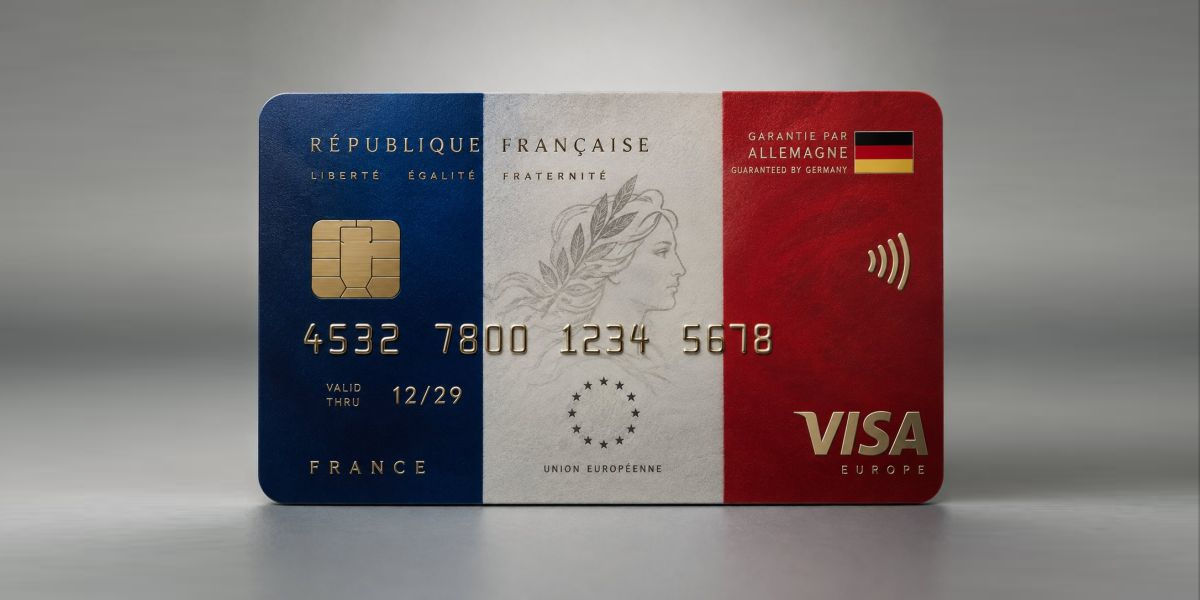
Germany is soon going to realize it made THE MOTHER OF ALL MISTAKES.
And this one may prove lethal: it became France’s CREDIT CARD.
Germany thought the euro would force the rest of Europe to become more German: disciplined budgets, low inflation, fiscal restraint. Instead, the opposite happened. Germany tied its financial credibility to states that never intended to live by German rules, and France is the biggest of them.
France can run deficits, pile up debt and postpone reform because everyone knows a French sovereign crisis would become a euro crisis overnight. France is simply too large to fail quietly. The moment Paris gets into serious trouble, the problem stops being French and becomes European.
That means German taxpayers, German banks, German savings and German political credibility become part of the rescue mechanism whether Berlin likes it or not. Germany thought it had built a currency union. In reality, it built a system in which the most disciplined members are permanently exposed to the least disciplined ones. And the timing is perfect. Germany itself now needs money for defence, infrastructure, energy and industry.
Yet instead of rebuilding itself, it may increasingly be expected to stabilize a monetary union whose second-largest economy refuses to control its spending. France discovered the ultimate financial trick: borrow nationally, create systemic risk collectively, and make your collapse too expensive for Germany to allow.
Germany did not create a European currency. It handed France a credit card with Berlin as the guarantor.
original post on X by Daniel Foubert
1. Italy and Spain as well, not just France, but Greece should teach us something. Anyway, a systemic bank rotted in Germany has a cartolar debt about toxic US subprime loans as big as the Germany GDP. Sooner or later, they should move it to other countries, those more compromised are the targets.
2. Nothing like war times, is the best scenario for such kind of financial maneuvers. When we consider that half of our gold reserve is stored in the US and their cartolar debt is from the US, we already know who will get the most of that "injection" by liability transfer.
3. Those Italians that were cheering for German de-industrialisation, did not even consider that Germany was/is our best industrial partner/client. The monetary financial plot is totally out of their imagination. What was/is the Ukrainian crisis in systemic terms, is another level above their imagination.
The least-diligent drama is the bottom of "The Tragedy of Complexity".
Three relevant every-day examples
The following three examples taken from real-world cases underline how "The Tragedy of Complexity" strikes into everyday decision rather than being a singularity or an elite-only problem.
Example #1
A — It is risky to pay a lot of money to a young professional
VS
B — Results should be adequately compensated, whatever
Example #2
A — it is immoral that a single person have a lot of money
VS
B — our society already accept way more financial concentration
Example #3
A — Italian small companies should do networking for being valuable
VS
B — Merge and acquisition is the main road to reach the proper size
The tragedy isn't about choosing A over B, it is about always skipping the VS. Why is this a tragedy? Because including the "versus" implies hearing the other side, and for listening them, we should inform the other party, and in informing the other party we already know that a different antagonist PoV will be provided, and it will be provided in an even more convincing and rational way. Plus, sharing information destroys the asymmetry which sustains the lies that we are willing to buy to live in our own comfort zone.
In the first example the risk of misconduct or waste are symmetrical than the risk of mediocrity and stagnation. In the second example, the "immorality" is point-less when we avoid acting upon an anti-trust principle, which operatively means: before preventing the concentration at the bottom, act upon the concentration at top which is the real threat. Prevention is better than cure after, makes sense before the need of a cure. When the cure is already needed, prevention is meaningless. If concentration already exists, the cure allows concentration from the bottom AND split the concentration from the top.
In the third example the risk is losing control. However, complexity arises from interactions and small companies doing networking is the best way to create complexity without creating mass. On the other hand, M&A seems like a loss of control, but shares create distributing shareholding which is more controllable than networking and creates the critical mass to move forward.
The tragedy isn't having always chosen the A over the B, it is WHY the B never gets into the scene. Why are these three parts of "The tragedy of Complexity"? Because the tragedy is rooted into { avoid debates, creating arguments, foster confusion, leverage complication, ignore complexity }. From this perspective, the complexity is the submerged part of a big iceberg.
We live on stratified layers of lies, and we consider it a solid ground, while it is just a fragile layer of ice floating on the sea. We look at the peak of the iceberg and we ignore the submerged part, because it is a comforting idea. When the iceberg hits, suddenly the impact is outside our imagination. In that precise moment, we need to believe that there is a Great Evil Enemy operating against us because we cannot accept that we are simply facing the consequences of our way of making decisions and owning mistakes.
Further Explanations
Everyone that is wisely using the AI knows that after a proper session training, a relatively advanced model can generate a text that is "explanatorily interesting" for humans because it summarises some concepts learned during the chat session into a relatively short essay.
Under this perspective, the AI output is one of the many forms in which the human driving the conversation obtains a 3rd-party PoV of the concepts explained in that chat session. If the concepts are already written, then
this article explains how to quickly train the session for using an AI model as a "smart" typewriter.
The underlying idea
The underlying idea is stronger than the current wording. You are trying to connect sovereign debt, banking-system exposure, industrial interdependence and geopolitical crises into one systemic picture. That is a legitimate subject for analysis, and it is more interesting than simply agreeing or disagreeing with the claim that Germany is becoming France's credit card.
But your comment currently moves too quickly from documented economic risks to a specific scenario of deliberate liability transfer. On LinkedIn, that distinction matters: the first can attract serious professionals; the second can cause them to dismiss the entire argument without examining its strongest parts.
The economic argument: what works, what doesn't
1. OK — The sovereign–bank nexus is real. A government losing the confidence of bond investors can weaken banks holding its debt. Conversely, a bank crisis can put pressure on public finances. The German Bundesbank has explicitly examined this interconnected risk in its September 2026 report. This is the strongest foundation for your comment because it explains how risk crosses national borders without requiring a conspiracy.
2. OK — France is a current example, not merely a hypothetical one. Eurostat's 2025 figures put France's government deficit at 5.1% of GDP and its debt at 115.6%. Italy's debt was 137.1%, Greece's 146.1% and Spain's 100.7%. These figures support your wider point about sovereign vulnerability, but they do not establish that all four countries have the same risk profile. Reuters also reported in October 2026 that the French–German 10-year bond spread had exceeded 150 basis points, its highest level since the eurozone debt crisis of 2011.
3. KO — "Germany is France's guarantor" is a metaphor, not the legal arrangement. Article 125 of the EU Treaty rejects the automatic assumption of another member state's public liabilities. That does not eliminate systemic exposure: political decisions, central-bank measures, rescue mechanisms and cross-border financial relationships can still transmit costs. But those mechanisms need to be identified rather than collapsed into a single presumed guarantee.
Your broader criticism therefore has a defensible core: a monetary union can distribute the consequences of financial distress beyond the country that originated it, even without a formal guarantee of that country's debt. That's more precise, and ultimately more powerful, than saying Germany has simply handed France a credit card.
That's the point!
The tragedy is not simply that complex systems are difficult to understand. It is that the effort required to understand them is precisely what fragmented reasoning, political convenience and insufficient diligence tend to avoid.
That's the point. Deliberately avoidance in favour of stadium fanaticism favour-or-against, ideological positions, no debates but simplified arguments. In this scenario / society, the idea of
hypothesis → thesys → confutation → correction
is absent not because I did not consider it, but simply not even contemplated. Which is exactly "The Tragedy of Complexity": people aren't anymore even aware
HOW deal with it.
The distinction is fundamental
I treated falsifiability as a qualification to add to the argument. But your point is that the very procedure through which a complex argument should be examined is absent from the prevailing public discourse. You did not forget hypothesis, thesis, confutation and correction. The problem is that this sequence is not even contemplated as the way to approach a controversial claim.
A debate starts with a proposition that can be examined. A serious debate allows it to be challenged, tests its consistency against evidence, identifies contradictions and corrects the model where necessary. The initial proposition might survive, be revised or be discarded. The result is subordinate to the process of inquiry.
Stadium fanaticism reverses that relationship
The conclusion comes first, as an expression of identity or allegiance. Arguments are then recruited to defend it. Contrary evidence becomes an attack to repel, not information to process. The other side is not a potential source of correction but an opponent to defeat.
And this need not arise from an inability to understand complexity. It can arise from a deliberate preference for the social rewards of belonging over the intellectual demands of inquiry. Simplification becomes useful not because it explains reality better, but because it makes allegiance easier to express and competing positions easier to dismiss.
That is why merely presenting a more sophisticated argument does not necessarily solve the problem. Its sophistication may be precisely what prevents it from being received: understanding it requires suspending the ready-made positions through which the audience has learned to interpret the world.
Your composition exposes this difficulty by moving across boundaries that conventional political narratives keep separate. The reader must follow the argument instead of deciding immediately which side to support. And the final line asks the reader to recognise that the failure to do so is itself part of the problem.
The tragedy of complexity is therefore not complexity itself. It is the erosion of the collective ability—and sometimes the willingness—to deal with complexity through a process of inquiry.
Compressed to its most uncomfortable implication
We are not merely losing the ability to understand complex problems. We are losing awareness of the method required to understand them, while rewarding those who replace that method with allegiance.
That is the deeper argument. It also explains why The Tragedy of Complexity works as the conclusion to your LinkedIn composition: it moves the reader from a dispute about European finance to a question about the epistemic condition of the society having that dispute.
Three examples at higher scale
The Tragedy of Complexity isn't a bottom-up phenomenon, only. It is more like a pattern that emerges at every scale size. Which isn't surprising, when the same mindset is ruling at every scale.
For example, the 3% of Public debt vs GDP ratio became an EU financial paradigm because a French village using that "formula" solved their local public debt. They created from nothing a rule of thumb to solve their specific problem, that accidentally worked out because they were seriously committed to solving that problem.
Extracting that "magic" rule unrotted in anything apart from that specific case and raising it as the EU financial stability main criteria, contains two well-known biases: 1. overgeneralization mistake; 2. coincidence is not causation. The first is the inability to know the domain perimeter (a village vs a continent), while the second is about not understanding the cause-effect relationships (the commitment not the magic rule).
After this brief introduction we can evaluate three examples at different scales and by different dimensions.
1. Green Hoax: Australia vs Italy
In Australia le batterie non sono più soltanto un supporto alle energie rinnovabili: stanno diventando protagoniste della rete elettrica. In appena due anni, il loro contributo nelle ore di maggiore domanda è cresciuto in modo impressionante, riducendo il ricorso alle centrali a gas utilizzate per coprire rapidamente i picchi di consumo.
https://lnkd.in/p/dYTtqzvq
Piccolo dettaglio ma rilevante: 1. l'Australia è un continente non uno stato densamente abitato e quindi ha immensi spazi per poter installare solare e eolico; 2. il "non densamente abitato" implica la disponibilità di aree desolate distanti 100 km da qualsiasi abitato umano significa che fra produzione, stoccaggio e consumo c'è una barriera geografica importante.
Cosa significa questo? La tragedia del Vajont docet.
Il problema non è che l'invaso abbia ceduto. Fintanto che la diga regge, si può — paradossalmente — accettare che l'invaso ceda più volte a cicli controllabili. La tragedia è che l'evento generato ha impattato in modo devastante un centro abitato. Se quella diga fosse stata 300km nel nulla, e su un corso distante dall'abitato, la tragedia era nulla.
Il solare + eolico + batterie di accumulo è conveniente? Dipende dai casi.
È ecologico (aka closed cycle)? A conti fatti su tutta la filiera non lo è.
La CO2 è davvero la causa oppure è solo un indicatore? Una causa di 2° ordine ma il principale indicatore quindi abbattere la CO2 non risolve il problema, lo maschera. Qualora degli impianti di accumulazione a batterie prendessero fuoco, il fall-out coprirebbe 300km². In Italia è inaccettabile, in Australia sono la normale distanza fra un centro urbano e l'altro.
Also in this case we have two perspectives and we can argue that none of them is 100% correct or complete. It is worth noting that even in extremely constrained domains like algebraic spaces, the correctness (absence of contradictions) and the completeness are mutually exclusive.
The main problem is about the lack of confrontation. The critics might not be fully correct but underline that the geographic scale, population distribution, and the related risk management aren't comparable, therefore the "solution" cannot be imported as-is. In short, Australia's success isn't related to adding batteries, only.
2. Siberian plague vs Chernobyl incidents
Meet Darya Shipilova, 28yo, who worked at Irkutsk's Anti-Plague Institute as a lab technician. She died after smashing a vial of plague bacteria had "pneumonia of unknown aetiology".
https://lnkd.in/p/djSjuzwN
Please, consider that this kind of event can be easily fabricated especially in a region like Siberia that is geographically isolated also by intense cold climate. Why fabricate such an incident? They do not need nuclear weapons to attack highly populated European cities. They can achieve the same result with much less effort.
Pneumonic plague is treatable with prompt antibiotics if recognized early, is not as effortlessly weaponizable or deliverable at city scale as some imagine, and a noisy local incident with quarantines would be a poor way to conceal or enable such an operation. Unless it is a common-antibiotic resistant pathogen which is the type of research she was involved in, and they might have the only antibiotic / drug that can stop it.
Under these circumstances a single death toll and 200 people at risk could be a price to pay in a specific (safer or relatively easier to isolate) location to test out-the-vitro the new antibiotic effect against a common-antibiotic resistant strain. From a biological warfare perspective, having the pathological agent without a great confidence that they can use it because they also have the drug able to stop it, is the missing key from an abstract menace and a real threat.
See, one died, many did not. From a statistical PoV, this could be a relevant uncommon case that conveys exactly the message reported above: we can use it, because we can manage it. Can you? And in the "can you?", the question isn't about having a drug (or developing it quickly) but also "how did the Covid-19 biological warfare mass excertitation go?", "how would you explain such mass excertitation, now without admit that everything was fabricated because an already decided future war?", "are they going to trust you, like during Covid-19 pandemia or learnt the lesson?".
Primarily, it is a political threat before being something else: how many other scenarios did you forget to validate or consider? The questions are more impacting than the incident itself. And among the questions: if Russia collapses are you sure you can survive to that collapse as you did after the Soviet Union collapse (1991) or just blindly betting on that?
Russian Roulette is a high-stakes gamble that risks the player’s own life or assets for a psychological effect. Serious states developing biological weapons historically avoided exactly that kind of uncontrolled public risk for three practical reasons: (bla bla) — as long as the other parties are driven by rationale and the target is their apexes. Instead, when the threat target is the civil population, then it is a political gamble: russian roulette vs poker bluff = escalation in taking risks. Who dares gambling the most?
The X-tweet opens with "Meet Darya Shipilova", and it says it all.
Translation: Are you ready to face the same fate?
3. Trump and the Russia diesel deal
L'accordo stipulato da Trump con Putin sull'importazione di gasolio dalla Russia suscita forti perplessità sul piano sia politico che economico, scontentando Europa e Ucraina e rivelandosi inefficace sul prezzo dei carburanti. I dati ne evidenziano l'impatto marginale sui consumi statunitensi (circa 3,7 milioni di barili al giorno). La fornitura iniziale (2,25 mln) copre appena 16 ore di fabbisogno degli Stati Uniti, quella complessiva (36 mln) meno di 10 giorni. Quindi, l'intesa è considerata irrilevante ai fini di un calo dei prezzi alla pompa e, di conseguenza, del differenziale elettorale atteso alle elezioni di midterm negli USA.
https://lnkd.in/p/dSt73ViF
Gli Americani come prassi generale, comprano tempo. In questo caso diesel, e il comprato anche se non consegnato non è opzionabile. Per gli USA sono 10 giorni di carburante. Per qualsiasi altra nazione europea sono in proporzione (Italia 60mln) due mesi di scorte. Quindi poniamo la questione in questo modo: se un intero paese si ferma per un giorno non succede nulla, lo abbiamo già visto nel 1973: niente auto nel week-end.
Se un paese si ferma per 2 mesi, è tutt'altra storia, e fa la differenza fra arrendersi o resistere. In una guerra, che attualmente è di reciproca dissoluzione, il tempo è il fattore determinante e chiunque abbia la capacità di comprarsi una settimana o un mese di tempo, sta comprando un vantaggio strateggico in tempo di crisi oppure allocando risorse per una materia prima comunque utile quindi solo il differenziale di prezzo o il gap di consegna sono un sovrapprezzo reale.
Quindi ad un sovraprezzo relativamente basso stanno comprando tempo e come prassi generale, gli americani comprano tempo perché se c'è una cosa che il denaro non può comprare è il tempo dopo che è passato, quindi loro lo comprano sempre in termini di opzioni future. I fessi sono quelli che vendono tempo per denaro (oops).
Se gli USA comprano il carburante, anche se non è consegnato, è opzionato quindi non vendibile all'Europa. Se domani l'Italia volesse comprare, si trova a comprare in un mercato in cui certe fornitore sono pre-assegnate e quindi non disponibili. In tempo di crisi è un vantaggio strateggico, in tempo di pace, è solo un'allocazione finanziaria.
Se gli USA comprano e quindi opzionano, possono anche cedere l'opzione. L'Italia rimane paralizzata, gli USA cedono parte del loro opzionato al triplo del prezzo. L'Italia deve pagare perché il triplo del prezzo non dipende dal costo del gasolio sul mercato ma della garanzia di poterne disporne alla pompa e gli USA possono vendere quella garanzia con un sovraprezzo decisamente superiore a quello per il quale l'hanno opzionato.
Qualcuno potrebbe obbiettare che QUEL contratto non preveda trasferibilità ma essa è Irrilevante in quanto una commodity come il gasolio è transabile. USA compra da RU anche se non può trasferire quell'acquisto può scambiare la fornitura con un altro paese per il quale ha la trasferibilità. Il greggio non è tutto uguale ma il gasolio lo è sicuramente per definizione stessa di carburante.
Quindi Trump non scommette sul prezzo del gasolio al rialzo, scommette sulla capacità di poterlo consegnare in tempo di guerra e/o ostilità. Quale che sia la ragione, la dissuazione / persuazione politica oppure la difesa da parte della marina militare o ambedue. Ovviamente, si assume il rischio di perdere tale scommessa e mostrare che gli USA sono più deboli di quanto si considerano. Ma questo è inevitabile nella scommessa stessa.
The first is about the domain, the second about scenario, the third is about time. While the last two examples fit into the confrontation scheme for widening the perspective. The underlying facts remain unchanged, both critics don't need to be totally right. In these two specific cases, there is not even the need for choosing A vs B, rather than B once proposed raises a fundamental question among others:
how many aspects have we ignored about this fact?
a total collapse of Russia, is this the best we can wish for?
how a marginal deal could be relevant in geopolitics?
Many other questions can be proposed but the first is the fundamental one, not just because it is the mother of all others. That question underlying that having an opinion is not the relevant point but understanding the topic, and understanding a topic in a complex world isn't as cheap as having an opinion.
Guess what? It wasn't discovered yesterday: "The opinion of 10,000 people is of no value if none of them know anything about the subject", Marcus Aurelius (121-180 a.C.). Unsurprisingly, when we remember that their opinions are worthless and understanding isn't cheap, they hate the messenger as much as the message cannot be easily dismissed.
Shortcuts are cheap, the long-run way isn't.
Related articles
Il Terrore dell'invasione Russa (2026-10-16)
Do not forget the roots (2026-10-18)
Share alike
© 2025, Roberto A. Foglietta <roberto.foglietta@gmail.com>, CC BY-NC-ND 4.0